Friday, February 18, 2011
False Spring
Figure 1.1
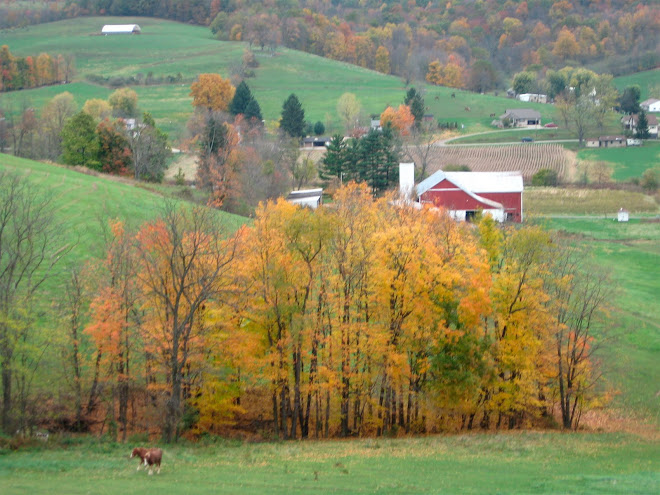
February 17. 65 degrees in SE Ohio. Our minds shift to "April" "earth," "skirts." We check lawns for daffodils-in-the-making, our laundry remembering how to flap. No one checks the 10-day forecast. We don't want to know.
Figure 1.2
On my way to play piano for a college ballet class, I spot a sunflower the size of my palm on the sidewalk ahead. Escaped from a bouquet? I think, excited, Or a sign that spring's settled in? I reach down to be its rescue--find out it's plastic. The rest of my day feels the same.
Figure 1.3
A college town openly displays its secrets, especially when snow finally melts. Crushed green glass and leopard bikini briefs, abandoned; an open pizza box with a necklace inside; cigarette butts, the tail-ends of conversations never finished. This time of year, the ground can reflect us.
Figure 1.4
For seven weeks, I gently build up to two questions, give my college students hard homework: What does it mean to be a writer in a time of war?, What would you ask a soldier if you could ask anything? Only half the class shows up to answer. I come home and pull the covers over my head, just another bulb.
Figure 1.5
The full moon pulls out dreams like silk pajamas from open drawers. For weeks, my sleep's been filled with characters in plain dress, actors in bonnets or suspenders pretending to be something they're not. I am the one who calls them out, reveals their false identities. Exact accusations from these dreams: "Who's your bishop?," "What have you given up?," "What's your favorite cheese?" The question I get most often about my upbringing: "What makes you different from me?" Sometimes, it also feels like accusation.
Figure 1.5a
Last night, I was going to build a house on the edge of my grandpa's farm--but in the dream, I didn't recognize the land. I wake up frightened.
Figure 1.6
The wind stirs up more questions, allergies, afternoons under the covers. How long can a Mennonite last without community?, Have the squirrels eaten all the daffodil bulbs?, Could my students spend a whole day in silence? Could I?, Who will shake our lives gently, tell us, 'Shhhh--You've just been dreaming'?
Figure 1.7
Even Thoreau kept secrets hidden by the louder things he said, had his mother do his laundry. The wind blows our socks from the clothesline and into the woods. The president gives a speech. We forget what we're funding. It's too warm to care. I may never know what my students have learned from me.
Figure 1.8
Accepting the shape of one life takes practice. Remember asking for someone to help you trace the outline of your body on a sheet of torn-off paper? Did you recognize yourself as only border? I swear, just now, I smelled what the garden could be.
(Photo by Nico Nelson on Flickr)
Thursday, December 23, 2010
Follow the Shepherd Home
I am happiest in places where I can walk to everything I need. I drive maybe 10 miles/week, if I have to. This luxury, however, feeds my fear of driving. After mulling it over for years, I finally purchased a GPS system, complete with a calm female voice telling me which lane to get into and redirecting me when I take a wrong turn.
The GPS came into my life much to the chagrin of my do-it-yourself, I-could-have-been-an-artsy-pioneer husband, who--on a disastrous road trip to see a recent Over the Rhine concert--vented that he now had TWO women telling him what to do when he drove!).
Needless to say, we have earmarked a new rule of marriage: I use the Tom-Tom when I drive to new places, and he does not. And having the GPS means that I will volunteer to drive more frequently (with the idea of finally breaking that wild stallion of phobias: making a mistake, which as we all know, can carry more weight on the highway).
My compass instincts are too easily swayed. Growing up, I learned destinations via landmarks or through daily practice, not intuition or even common sense. "Turn at the next red barn with horses in the alfalfa fields" was a legitimate instruction. Imagine my surprise when I lived in cities where one wrong turn meant possibly circling for hours in a foreign land (which, yes, I have done, martyr that I sometimes am.)
I've been a visual learner on most of life's main roads, as well. For a writer, this can be dangerous, only in the sense that I went through college and my 20s always looking ahead to one version of "success" or another: what was the next thing I could read, publish, write, win? No pun intended (well, maybe), but I was driven with a capital "D." I wore what you could call "literary blinders," my life focused on what was just around the corner...
And who am I kidding? The blinders are comfortable, though kind of like texting while driving: really freakin' dangerous to your overall health. And now, the Internet brings us a constant hailstorm of journals and contests and blogs and reviews we did not write and have not written and maybe, if we let this realization sink in--we never will .
This is my old self talking. Or, at least this time of year, it's easier to hope that it is; that come Jan. 1, I'll be able to shed that layer of my self-snake-skin that follows around every artist: doubt. Seems at least once a year we have our mental burnout when we swear we will never write again...Thank god, we grow out of that version of our selves. Over and over, we step into a new road, breathless.
My dad once gave me a quote he'd read somewhere: "The greater the artist, the greater the doubt. Perfect confidence is given to those less talented as a consolation prize." I used to let the heart of this steer me. But in the end, it just led me circling a city I'd never get to. (If I spend my whole life in a fog of creative entitlement, when will I actually get to enjoy the things I'm creating?) I think acceptance and groundedness trump doubt any day.
Here's the joy-bound slow lane academia never taught me: the drive isn't worth it if the gas tank's filled with the wrong stuff. I know, I know--enough aphorisms and metaphors. Here, "drive" means what makes us write every day. Here, "gas tank" means our storage of self-kindness, empathy, patience, and faith.
William Stafford once read a poem at an event where an audience member shouted "I could have written that!" Stafford thought for a moment, then said from the podium, "Well, you didn't... But you have a chance to write something of your own" (paraphrased from an excerpt in Early Morning... by Kim Stafford--a book, by the way, that has changed me).
For 50+ years, Stafford rose early to write, what he called "doing the hardest thing first." His usual pattern started at 4 a.m. (you can read that short sentence again if you need to). His days were filled with his family, teaching, correspondence, and a fiery love triangle with pacifism, literature, and nature.
After researching Stafford's work, here are the road signs I gleaned for the kind of life I want to lead, both on the page and off of it:
"Life Advice from William Stafford"
Do the hardest work first
Know there’s a thread, and follow it
Follow smoke’s way (be flexible, vulnerable, surprise-able)
Send your work into the world like water leaving a hilltop
Certainty & its anger can kill—even a little at a time
Know the weight of a happy problem
When you get stuck, lower your standards & keep going
Do not engage in war of any form
"Every person you meet has a god / and is an animal /
Find both"
Though technology has usually been at the root of some of my most stressful moments these past few months, I am grateful to be sitting here, blogging about an imperfect man and writer who knew who and what his shepherds were (and who has inspired me again to revisit the source of my craft and belief systems). I am grateful for an ocean of new creative work in the world where I am a small and stubborn wave. And I am grateful for that insistent female voice that will undoubtedly keep urging, "In one mile, get in the left lane."
May that voice be my own, and may I learn not to grit my teeth in unfamiliar territory. May that voice call me home, back to the constant advent called "a writing life."
"Turn," says the muse, says the next fresh morning, "Turn here."
("Follow the Shepherd Home" by Mindy Smith)
Friday, August 13, 2010
"How to Be Alone" (a poem-film)
Funny how technology can often encourage the fear of being alone. Autophobia. How appropriate, no? After all, many of us, happy to be on auto-pilot, experience withdrawal during hours without email, phones, cable, and Facebook. I'll be the first to admit that I've caved in and spent time with NetFlix when my goal was to dodge myself, when I didn't want to acknowledge my psyche or the Spirit.
Maybe "alone" is not the right word here, exactly. Maybe slowing down and realizing one's actual size in the universe is harder than we acknowledge it to be. Heck, I come from a people called "the quiet in the land," and (many? most?) of us are now just as much a part of the rat-race as greater society. Feel free to prove me wrong, please.
How would America change if spending time alone (in order to know the self more deeply) wasn't seen as a weakness? (I don't think it's an accident that I began to type "wean" back there!)
A friend sent an Online video to me today, and it really struck a chord. Check it out:
"How to Be Alone"
I hope, dear reader, that you're circled by community, by people who've learned and love the layers that are you. But I also hope you can take yourself out for a walk now and then, to a movie, a concert--and still feel held. Whole. Tilting towards happy.
Chicana writer Gloria Anzaldua writes about carrying home on her back like a turtle--something she can never escape, but something she wants to keep reclaiming as her own. The self, too, gets transformed depending on where we take it, how we carry it, how we listen and react.
I'm turning off the computer now, the radio, the lights. The cicadas are the loudest they'll be this summer. They've been trying to get my attention. It's about time I let them.
Wednesday, July 28, 2010
Growing Rhubarb: A Tribute to Art Gish
![]() |
| photo: http://mchenrycountyblog.com |
Tonight, I'm digesting the news that Athens has lost one of its pillar citizens.
Truth is, a peace activist willing to "walk the walk" will continue on through the people he knew worldwide and the convictions he published. But this doesn't make the news any easier to accept...
Art Gish saw bold beauty in living simply and in the sloppy footprints of love. This made him a mentor in the back-to-the-land movement and a controversial figure to some.
Like most people who knew him, I had moments with Art when I wanted to hug him and others when I wanted to run in the other direction. I say this with love--Art was a man willing to stand in front of an Israeli bulldozer; willing to look for God in a chapel, mosque, and synagogue in the same weekend; willing to do peace work in Gaza while his wife did peace work in Iraq; willing to stop you on the street to say his truest feelings, even if they made you uncomfortable. For someone who grew up in a community/family where confrontation was avoided, I was reminded that I still had a lot of inner work to do during those times when Art "shook me up."
I first sought out the Gishes after coming back from a year of Mennonite Voluntary Service (VS) in Seattle. I remember thinking that if I had to come back to Ohio, at least I was going to live in a place that had people like Art and Peggy. With no answering machine and no cell phones at their farm, it was harder to reach the Gishes than I planned. But I remembered my mom describing Art Gish from one of his many local talks on peace-making, and the first time I saw a man with a dazzling white beard and donning an Amish hat, I strode over to him and piped, "Mr. Gish?" He shook my hand and hurried us towards the court-house, where he was leading a peace vigil. One of the many reasons I went into VS was because I read Art's book, Beyond the Rat Race (as my parents did before me, then passed the book onto me)--and it challenged me, inspired me (and let's be honest, scared me). Still does today.
I also wanted to talk to the Gishes because of their experience doing peace work abroad. At the time, my parents were in Liberia with Mennonite Mission Network, and, as much as I wanted to deny it, as their youngest daughter, I was having difficulty processing their decision to leave--to put themselves in potential danger--for other childrens' sake. When my parents were in the States for a brief visit, the Gishes had us out for dinner, and we talked about poetry, farming, and the importance of being a witness.
"You're eating weeds!" Art told us proudly as we munched out dandelion and thistle salads. Everything had a surprising purpose, even if we thought it didn't. This was the mantra I took from the Gishes that night.
Art and Peggy sold produce at the local farmers' market; rhubarb was a regular pink wonder on their table of goods. I think that rhubarb might be a perfect metaphor for the daily activism Art chose to live. After all, "rhubarb" is not relished by everyone--even avoided by some; it's bold and unique and can be used with many other ingredients (but it will still be undeniable); it takes time to get established. But it comes back, year after year. And it gives, even when we don't want what it has to offer.
The last things I heard Art say on this Earth were:
(at a Quaker Meeting) "I want to say that I hear the birds singing, praising God--and I want to praise God too."
and
(after seeing a local film about the peace movement since the first Iraq War) "Where is everyone [in the movement now]? Where are they?"
In Beyond the Rat Race, he writes, "It is said that the longest journey begins with one step. So it is with simplicity."
So it is with peace, and so it is with marrying the "sour and sweet" together of knowing ourselves and one another in a life that offers many opportunities for us to turn away.
Let's not turn away.
Monday, July 5, 2010
"Off You Go to Now"
I’ll admit it: one reason I drag myself to yoga is to hear the teacher say things like, “You are here now—forget the striving.”
Imagining a "writer" at work often invites us to conjure up Hollywood-inspired caricatures: someone who’s actually on vacation from the stressful real world; someone leaning back in a comfy chair with a tiny pink umbrella hovering in a drink; someone able to turn on the muses with a flick of the mental switch in order to wear all the hats in her or his life.
I’m starting to know many folks who consider writing to be their main "calling," and even the most successful have day jobs…and usually partners… and families… and in-laws and yards and houses and…well, you catch my drift. It’s a miracle we have people writing and publishing at all!
Ironically, since I started an intensive MFA in writing, the same message I long to hear from my yoga instructor has repeatedly surfaced from teachers. It’s that old nod to the truth that writing needs something more than a degree in order to keep it breathing.
The MFA might teach us to shape and digest language at an Olympic rate, but if we’re pursuing it just to feel like a writer, we’re probably in the wrong spot with the wrong binoculars. And, as so many famous writers (so very ironically) remind us in their memoirs or interviews: if you’re writing toward the goal-light of publication or making a living writing, you might as well take up a different hobby.
Doing and giving are ingrained in my Mennonite self/gender. Making everything better comes in at a close third. Of course, you don’t have to be Mennonite to realize these generational or cultural patterns…As a writer, it’s pretty hilarious to watch my mind zigzag between wanting to be a good person vs. be true to my writing life. I’m not convinced you can’t be both/have both, but man, does it take discipline and self-forgiveness, playfulness and practice with a capital “P.”
Luckily, life has a way of handing us reminders, interventions, and even miraculous traffic lights when it comes to our lit passions:
From a latest MFA evaluation letter:
“Maybe the most important thing for Becca's art in the near future will be to set more limits on the demands that her life invites her to make—teaching assignments, community service—values that are deeply ingrained in her yet often at odds with more selfish indulgences that are the mainstay of every poet’s diet.”
Gift from an elder:
A copy of Thich Nhat Hanh’s YOU ARE HERE, with “Now you are here. Off you go to now” handwritten inside its cover.
May you open a book and find this same permission. May you open your life and find you are already what and who you want to be. And with each day, may you get to be this person a little more.
(photo: Athens graffiti, B. Lachman)
Tuesday, May 11, 2010
"Prophets" for a New Season
I teach a college-level composition course called "Women and Writing," its theme concentrated on "Women and 'Worship.'" While we certainly examine texts written by women raised in or practicing varying faiths, we mostly transform the definition of "worship" itself.
By this, I mean we look more closely at what American culture truly reveres, what it might expect a "gender" to love or reflect, and what we "worship" in our daily living. My students can relate to how a culture "transforms" a term (just ask them about their "friends" on Facebook).
However, when we transform a definition tied to something normally sacred, it's a difficult process. My students, not yet seniors in college for the most part, rarely take the time to ponder what they voluntarily spend the most time, energy, and money pursuing. It's scary. It's invigorating. It causes them to slow down, take stock, create a "close reading" of their lives and national identity, so to speak (or, that's at least what I hope happens on some level).
Next week, my students will present on female "prophets," meaning someone influential, a great teacher, a "trail-blazer." This "prophetess" is not necessarily popular and can be controversial in her message or lifestyle. From Lady Gaga to Sarah Palin, these student presentations always teach me more than words can say. I look at my students, their choices of what "prophets" shape their identity and culture, and wonder about the world they will create, uphold, demand...not that I'm too far from the Millenial Generation myself. But to stake a claim in the "me" generation can feel like a confession, right?
In my last post, I spoke of my hubby's job being cut to part-time. Little did we know that it would turn into a full lay-off. My job, too, is now at stake. I haven't blogged for awhile because what I have been "worshipping" has taken most of my mental energy. I began to question everything, from staying in grad school to the hierarchy of academia (though I am a lowly adjunct, I hope to keep teaching at the college level) to being an American to possibly moving across the country...My "prophet" became this invisible shadow-self, a constant hover-cloak of doubt and anxiety. And she was powerful.
As the dust settled and I began to look at our situation as a possible window we might never have opened otherwise, I've been seeking out other "prophets":
* singer-songwriters like Patty Griffin
* the strong women writers I teach
* Rumi
* generations of women in my family who have abundently lived and dreamt in the midst of "living with less"
* the Holy Spirit (and yes, I've always supposed the Spirit is female)
*even different versions of the self, parts of me that have grown--and most importantly learned--from change
It's May. A green May--water running in the streets. Thunderstorm after thunderstorm...and what grows after, what comes after, what is still there.
Who are your "prophets"? What would they ask (of ) you today?
Friday, March 26, 2010
Nights Like These, I Want to Be the Speaker in a Mary Oliver Poem
I went to an art exhibit today centered around "the figure"--bold ceramic creations that stretched assumptions about the human body. While I was pondering this art, my hubby got the call; we'd been expecting it as budget cuts began to affect more folks we knew. In July, we will most likely be joining the 40 million+ Americans without health care coverage, due to his job being dropped to part-time.
Suddenly, the elephant in the room has actually learned to talk. The questions start bubbling: What about finishing school? What about possible future children? What about the world that we imagined? We know we're not alone in this questioning, and we also know that, as Americans, our lives will still be privileged on the worst of days. But funny how quickly the mind breaks away from the body in times like these, when it screams I'm in charge now! Even now, my cheeks are flushed, my shoulders hunched forward, my whole body heavy with "What nows?"
Last night's post subject seems a wee bit ironic in hindsight...As an artist, I am used to society either deeming the work I do as "not worthy of health insurance" or making it impossible for me to receive benefits by keeping me part-time (adjuncting, for instance). I have also been down the road of catastrophic-only insurance plans...and spent more moola on unnecessary tests (needed due to stress, go figure!) than I ever plan to again.
So...I will not let this post become a rant, no worries. I will choose this new road as an opportunity to simplify my life even more, to connect mind + body into something stronger than fear.
Feel free to quote me these lines in the next few months. Unwelcome change can actually be what leads to a fuller life...We shall see. Now's the time to walk the talk. Now's the time to see what life has to offer vulnerability...
Glad I have the opening daffodils today--evidence that expected change can be lovely, bright; they're proof that we can't keep a season for long. So are poems:
You do not have to be good.
You do not have to walk on your knees
for a hundred miles through the desert, repenting.
You only have to let the soft animal of your body
love what it loves.
Tell me about despair, yours, and I will tell you mine.
Meanwhile the world goes on.
Meanwhile the sun and the clear pebbles of the rain
are moving across the landscapes,
over the prairies and the deep trees,
the mountains and the rivers.
Meanwhile the wild geese, high in the clean blue air,
are heading home again.
Whoever you are, no matter how lonely,
the world offers itself to your imagination,
calls to you like the wild geese, harsh and exciting--
over and over announcing your place
in the family of things.
"Wild Geese" by Mary Oliver
Subscribe to:
Posts (Atom)


